Posts

Showing posts with the label Vulnerability Assessment and Penetration Testing

Nikto: Definition, Features and Disadvantages

Image
What is Nikto? Nikto is an open source (GPL) web server scanner which performs tests against 6700 potentially dangerous files and programs. Nikto also checks for outdated versions of over 1250 servers. It is created by David Lodge and Chris Sullo and its first version is released on 27, December 2001. It is written in the Perl programming language. It checks for the presence of multiple index files and HTTP server options. Features of Nikto 1. It can find SQL injection, XSS, and other common vulnerabilities. 2. It can identify installed software via headers, favicons, and files. 3. It can also guess the subdomains of the scanned domain. 4. The reports generated by it can be exported as plain text, XML, HTML, and CSV format. 5. It can be integrated with Nessus. 6. It exports to Metasploit. 7. It can be auto paused at a specific time. 8. It can be easily updated via the command line. 9. It includes support for SSL (HTTPS) websites. 10. It has full HTTP proxy support. Disadvantage o...

Nessus: Definition, Architecture and Features

Image
What is Nessus? Nessus is a proprietary vulnerability scanner developed by Tenable Inc. Nessus is an open source (under GPL license) network vulnerability scanner that has a database of common vulnerabilities which is matched with the vulnerabilities of the system. Nessus works by testing each port on the server/computer and then finding any potential vulnerabilities. Architecture of Nessus 1. Modular Architecture It provides flexibility to the tester to deploy the scanner and connect to the client from any machine with a web browser. 2. Plugin Architecture It provides flexibility to the tester to add plugins and groups into one of 42 families. Through this, users can easily add their test by selecting specific plugins. Features of Nessus Nessus is written in NASL language which is Nessus Attack Scripting Language which is designed specifically to write security tests easily and quickly. Nessus has an inbuilt feature of auto-updating its database which helps to update and disclos...

Vulnerability Assessment: Definition, Types and Importance

Image
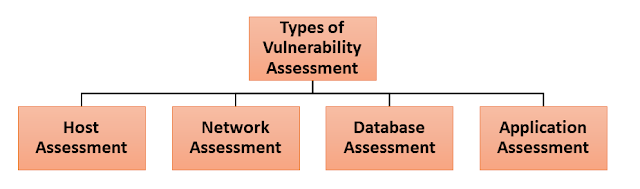
What is Vulnerability Assessment? The process of identifying security voids and weaknesses in an information system is known as vulnerability assessment. It checks and evaluates the suspected vulnerabilities in a system and provides information about its severity that is whether it is low, high, or critical, and suggests a way to mitigate them. Threats like SQL injection, XSS injection, DoS attack, etc on a system can be prevented by vulnerability assessment. Types of Vulnerability Assessment 1. Host Assessment It includes vulnerability assessment of servers, workstations, and other network hosts. This assessment examines ports and services that the host is using. 2. Network Assessment It includes vulnerability assessment of public and private networks on which the system is connected. This type of assessment can also detect vulnerabilities in wired and wireless networks. 3. Database Assessment It includes vulnerability assessment of databases or big data systems. This assessme...

W3AF: Introduction, Architecture and Features

Image
What is W3AF? W3AF stands for web application attack and Audit framework. It is an open-source framework. It is an open-source framework for auditing and exploiting web applications. It provides facts about security vulnerabilities and bugs for use in penetration testing. The scanner offers a graphical user interface and a command line interface. It is written in python programming language and compatible will all major operating systems like windows, Linux, FreeBSD, etc. Architecture of W3AF The W3AF framework is divided into three parts: 1. The core coordinates the whole process and provides libraries for use in plugins. 2. The user interfaces, allow the user to configure and start scans. 3. The plugins, which find links and vulnerabilities. Features of W3AF 1. It provides web service support. 2. It exploits SQL injection (blind), O.S Commanding, remote file inclusions, local file inclusions, XSS, and more. 3. It provides good harmony among plug-ins. 4. It has a discovery plugin ...

Penetration Testing: Definition, Phases and Types

Image
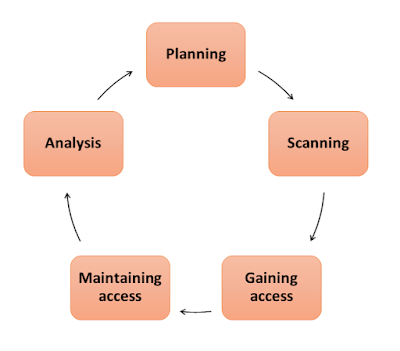
What is Penetration Testing? A simulated cyber attack performed on a computer system to check for exploitable vulnerabilities is called penetration testing or simply pen testing. Through regular penetration testing, we can discover new vulnerabilities in the system that are missed or omitted during a vulnerability assessment. Also, this helps the organization to set up a more secure computer and network system in the working ecosystem. Phases of penetration testing 1. Planning and Reconnaissance This phase includes gathering information about the target system through public and private sources like networks, domain names, mail servers, etc. This helps the pen testers to get preliminary information about the target system. 2. Scanning In this phase, pen testers use various tools to examine the target system vulnerabilities. Pen testers can scan the application's code in a running state and how it behaves during testing. 3. Gaining access In this phase, pen testers use web applic...

Life Cycle of Vulnerability Management

Image
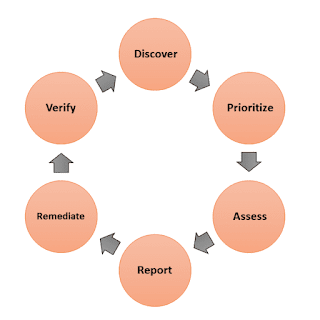
What is Vulnerability Management? Vulnerability management is a program that addresses common cybersecurity weaknesses in an organization's software, hardware, and network. These vulnerabilities can be exploited by hackers to steal data or do a brute-force attack. Therefore, vulnerability management helps to identify, close, and track these types of vulnerabilities and prioritize them in order of high risk to low risk. Life Cycle of Vulnerability Management 1. Discover This step involves the examination of operating systems, web services, hardware, web applications, and existing security patches to discover new vulnerabilities in the computer system. 2. Prioritize After the discovery of vulnerabilities, these are prioritized based on their nature which is informational, low, medium, high, and critical. The critical vulnerabilities should be dealt with first in the order of precedence. 3. Assess Now, assess all the vulnerabilities based on their severity. For example, low-risk vu...