Posts

Showing posts with the label Chemistry

Methyl Orange: Introduction, Preparation, Applications
Image
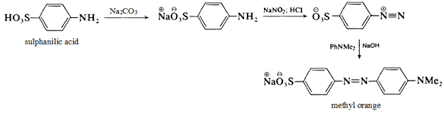
What is Methyl Orange? Methyl orange is a weak acid that breaks down into orange neutral molecules when it comes into contact with water. Methyl orange shows red color in the acidic medium and yellow color in the basic medium. That's why it is used as a pH indicator in titration due to its clear and distinct color variance properties at different pH. Preparation of methyl orange Methyl orange is prepared from sulphanilic acid N, N-dimethylaniline through a diazonium coupling reaction. The first product from the coupling is the bright red form of methyl orange, called helianthin. In the base, helianthin is converted to the orange sodium salt, called methyl orange. Mechanism of preparation of methyl orange The mechanism of this reaction is given below: Step 1:  Sulphanilic acid reacts with sodium carbonate extract and gets converted into sodium salt of p-amino benzene sulphonate Step 2: It undergoes a diazotization reaction in presence of nitrous acid to form diazonium chloride ...
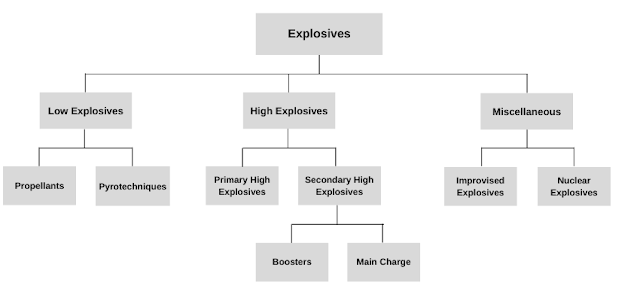
Classification of Explosives

Image
What are explosives? An explosive is a chemical substance that tends to release a great amount of potential energy that can produce an explosion if released suddenly. It is accompanied by the production of light, heat, sound, and pressure. The explosives can be classified based on their chemical composition, velocity of detonation, sensitivity towards heat and light, and physical forms. But broadly explosives are of three types: low explosives , high explosives , and miscellaneous . The latter is subdivided into IEDs and nuclear explosives. Classification of explosives 1. Low explosives Low explosives are chemical compounds in which the rate of decomposition through the material is less than the speed of sound. The deflagration rate in low explosives is less than 4000 m/sec. The proportion of burning of explosives depends on combustion gas, pressure, grain size, form, and composition. Examples of low explosives are gunpowder, flash powder, pyrotechnics, smokeless powder, etc. (a) Gu...

Classification of Controlled Substance

Image
Based on origin Based on their origin, drugs of abuse can be classified into the following three categories: 1. Natural Drugs Drugs that are obtained from plants and require little or no processing at all are known as natural drugs. Eg: Cannabis, opium, coca paste, etc. 2. Semi-synthetic Drugs Drugs that are obtained from plants but undergo the same chemical process are known as semi-synthetic drugs. Eg: Heroin, Cocaine, etc . 3. Synthetic Drugs Drugs that are synthesized absolutely through a chemical process are known as synthetic drugs. Eg: Amhetamine, diazepam, etc. Based on their use Based on the purpose of their use, different drugs can be classified into the following categories: 1. Therapeutic Drugs Drugs that have a certain therapeutic effect in terms of healing and prevention of certain diseases are known as therapeutic drugs. They are further classified into four categories: (i) Analgesics and Antipyretics Drugs that are used to relieve or decrease pain without the loss of...

Carbohydrates: Definition, Functions and Classification

Image
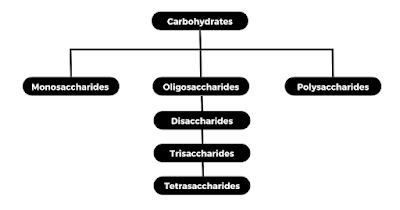
What are Carbohydrates ?  Carbohydrates are defined as optically active polyhydroxy aldehydes or polyhydroxy ketones or substances which give these on hydrolysis.  It is to be noted that aldehydic and ketonic groups in carbohydrates are not present as such but generally exist in combination with one of the hydroxyl groups of the molecule in the form of hemiacetals and hemiketals respectively. Carbohydrates include compounds like sugars, starches, glycogen, cellulose, dextrins, and gums. Though they are widely disturbed both in animal and plant kingdoms yet they are obtained mainly from plants by a process known as photosynthesis. Role of Carbohydrates in Biological System One of the primary functions of carbohydrates is to provide energy to the body. Carbohydrates are broken down into glucose which enters the bloodstream then it is taken up into the body's cell and used to produce ATP. These ATP's are used by cells to perform different metabolic tasks. Carbohydrates can ...

Phenolphthalein: Preparation, Properties and Applications

Image
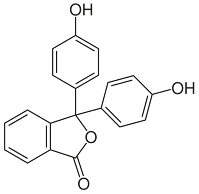
What is Phenolphthalein? Phenolphthalein is an organic compound having the chemical formula C₂₀H₁₄O₄ that is used as a ㏗ indicator in acid-base titrations. So, as an indicator, it turns pink to red in alkaline and is colorless in acid solutions. In short, it can be written as 'HIn' or '㏗㏗'. Preparation of Phenolphthalein Phenolphthalein can be synthesized by condensation of phthalic anhydride with two equivalents of phenol under acidic conditions. Properties of Phenolphthalein Phenolphthalein is white-yellow, in its crystalline form. It is readily soluble in alcohols and mildly soluble in water. It does not have taste or smell and it is carcinogenic. It appears colorless till pH 8.5 and above that it appears as pink to deep red. Applications of Phenolphthalein It is commonly used as an indicator in acid-base titrations. It turns colorless in acidic solutions and pink in basic solutions. It may be used as a laxative but it is not advisable due to the suspected car...

Essential Elements in a Biological System and their Role

Image
What are the essential elements in a biological system ? As the name suggests, elements that are essential or necessary for the life process are called essential elements . For example, Oxygen, Carbon, Hydrogen, Nitrogen, etc. Metals like Ca, Ni, Co, Zn , etc. are responsible for initiating or inhibiting reactions in biological systems. That's why in bioinorganic chemistry we investigate these metals in terms of their nutrition, toxicity, storage, and transport in biological systems. These elements are a must for normal growth and reproduction in living organisms and cannot be replaced by other elements. So, the following are some common essential elements that are found in humans and plants. 1. Calcium (Ca) Calcium is a critical essential element in all animals and human beings. A healthy human adult has about 1.05 Kg of calcium, out of which 99% exists as phosphates, resembling the mineral hydroxyapatite [Ca₁₀(PO₄)₆(OH)₂] in bones and teeth. The small remainder of calcium is ...

Classification of Natural Dyes

Image
Classification of Natural Dyes Dyes which are obtained from natural resources like plants, animals, and minerals are known as natural dyes .  So, natural dyes can be further classified into three types. 1. Natural Dyes obtained from Plants Dyes that are obtained from plant sources like roots, berries, bark, leaves, and wood are known as plant-based natural dyes .  For example, Logwood, Indigo, Henna, etc. They are also known as vegetable dyes and can be applied directly or with different mordants. 2. Natural dyes obtained from Animals Dyes that are obtained from animal sources like insects and invertebrates are known as animal-based dyes. Various shades of red and purple colors can be obtained from animal origin.  Cochineal, Tyrian Purple, and Lac are some common examples of animal dyes. 3. Natural dyes obtained from minerals Dyes that are obtained from mineral sources are called mineral dyes. They are produced by the metallic ions in the mordant salts.  Shades of ...

Edible Dyes: Definition, Types, Properties and Applications

Image
Definition of Edible Dyes Dyes that impart color when it is added to food or drink and can be consumed, are known as edible dyes . They come in many forms like powders, gels, and pastes and can be used in drinks, cookies, candies, etc. Types of Edible Dyes Based on the source, edible dyes are further classified into two types is Natural edible dyes and Synthetic edibles dyes. 1. Natural Edible Dyes Dyes that are obtained from natural sources like plants, leaves, flowers, seeds, roots, and animals are called natural dyes. Since they are obtained from natural sources, so there will be no harm to use natural edible dyes in preparing attractive food. Natural edible dyes also contain vitamins that are very essential for the body. Adding these ayes in food does not affect the taste of food and makes the food look more attractive. Examples of natural edible dyes are Annatto, Turmeric, Carmine, Paprika, etc. 2. Synthetic Edible Dyes Dyes that are obtained from petroleum-derived substanc...

Malachite Green: Definition, Synthesis, Properties and Applications

Image
What is Malachite Green? Malachite green is a type of Triphenyl methane dye that is used as a dyestuff for materials like silk, leather, and paper. It is bright green and can be used as an antimicrobial agent in aquaculture. Synthesis of Malachite Green Malachite green can be prepared by reaction of Benzaldehyde with N, N-dimethyl aniline in the presence of H₂SO₄ to form a triphenylmethane derivative. The subsequent oxidation with PbO₂ followed by treatment with an excess of concentrated HCl yields a green dye known as malachite green. Properties of Malachite Green Malachite green is green, crystalline, and water-soluble. Leuco form of malachite green is electrically neutral and undergoes a photoionization reaction that yields the cationic form of malachite green. It is toxic, thus not advisable to consume. Applications of Malachite Green It is used as a dye to color materials like silk, leather, and paper. It is used as an antiseptic for bacterial infection. It is used to catch thi...

Alizarin Dye: Definition, Synthesis, Properties and Application

Image
What is Alizarin Dye? Alizarin is a red dye having chemical formula C₁₄H₈O₄ which is generally used to dye cotton, wool, and silk.  Alizarin was originally obtained from the root of a common madder plant called Rubia tinctorum. It is also known as Turkey Red as it was best dyed in Turkey and in 1869, it becomes the first natural dye to be duplicated synthetically. Synthesis of Alizarin Following are some methods for the synthesis of alizarin: 1. From anthraquinone The starting material for the synthesis of alizarin is an anthraquinone. It can be easily obtained by Friedel-crafts acylation of benzene with phthalic anhydride. Anthraquinone is then sulfonated with concentrated sulphuric acid at a high temperature to give anthraquinone-b-sulphonic acid. Alizarin is obtained by fusion of anthraquinone-b-sulphonic acid with caustic soda. 2. By bromination of anthraquinone Another synthesis is given by Graeve (in 1869). In this method, anthraquinone is brominated to yield dibromo anthr...

10 Types of Dyes with their Properties and Dyeing Mechanism

Image
What is a Dye? A dye is a coloring substance that is used for giving color to different substances or altering the color of something. A dye chemically bonds to the substrate to which it is being applied and has an affinity to adhere to the solvent medium. A dye contains two groups that are chromophore and auxochrome groups in which a chromophore is a color-bearing group that is responsible for dye color whereas auxochrome is a color helper which is responsible for dye fiber reaction. Examples of dyes: Indigo dye , Phthalein dyes , Alizarin , etc. 10 Types of Dyes 1. Reactive Dyes Reactive dyes are those dyes that form a covalent bond between the dye and fiber. These dyes have a reactive group like halo-heterocycle or an activated double bond which once applied to a fiber with a hydroxyl group on the cellulosic fiber. In a reactive dye, chromophore has a substituent that is activated and allowed to directly react to the surface of the substrate. Some common examples of reactive dy...